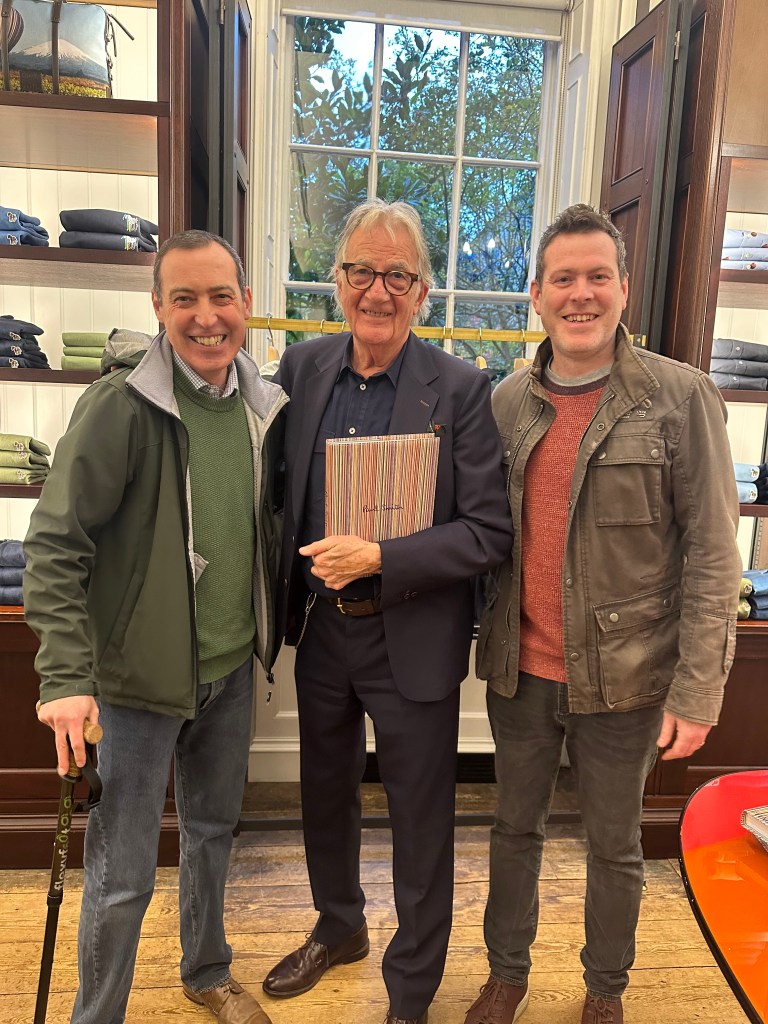
Paul smith is a rebel within an industry concerned mainly with conformity. Fashion is the mainstream by which everyday clothing choices are understood. We live in a somewhat judgmental and intolerant society where what people wear is scrutinised and criticised, often without a care towards individuality or perhaps even, personality. Paul Smith is different.
For over 50 years, Paul Smith has been at the stylish end of the rag trade. Born in Beeston in 1946, Smith is the youngest sibling of three. (This is important, since the third child is often the family rebel.) Although he had ambitions to take up cycling professionally, a serious accident meant that he was sidelined and became interested in art and fashion. He opened his grand sounding (yet diminutive) shop, Paul Smith Vêtements Pour Homme, on Byard Lane in 1970, where he sold his own handmade designs as well as other labels, part-time, from a premises with a shopfloor of just three square metres.
Stripes
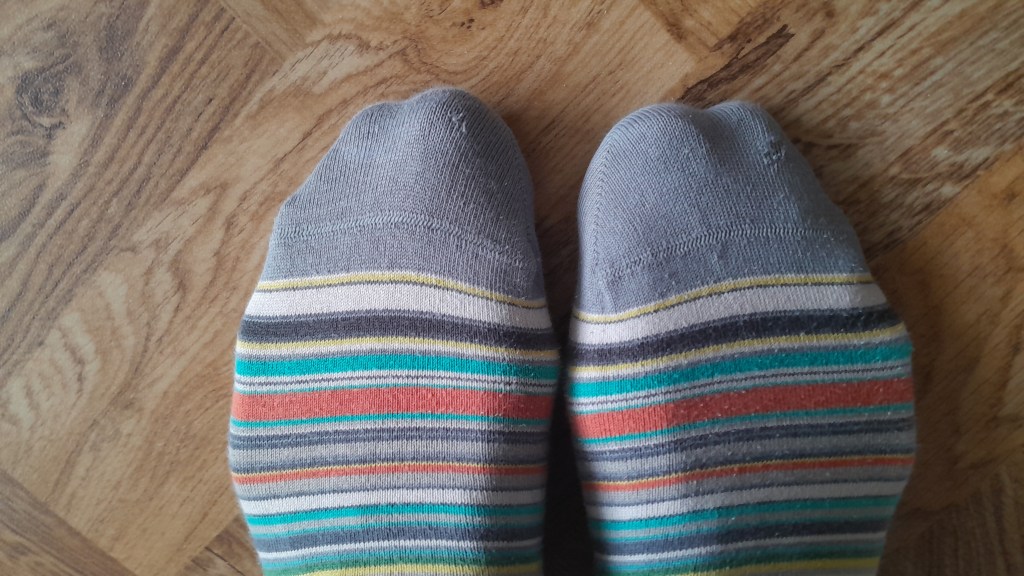
One of the mainstays of Paul Smith’s designs has been stripes, which have been present since his first collections in the 1970s. Somehow, despite being largely associated with prison uniforms and deckchairs, Paul Smith’s use of stripes has evolved and is a recognisable motif and ‘brand’ within a brand, to the extent where the design that celebrates every imaginable colour is now known as the ‘Signature Stripe’. Elsewhere, of course, his often irregular (near clashing) style of colour combinations has become a trademark, though it’s clear that he’s somehow riffing on his love of cycling jerseys, as well as the French impressionist artist, Henri Matisse (see: ‘L’escargot’ or ‘The Snail’ by Matisse 1869 – 1954).
Influences
Smith’s ‘maximal’ designs clearly take influences from an enormous range of objects and ideas. His designs, and to some extent, his shops, reflect an eclectic and nostalgic collection of collections, or cabinet of curiosities approach. He’s a magpie among pigeons, with far more ideas and influences than he can ever explore to the full, resulting in his diverse work radiating energy and enthusiasm.
Nottingham is a city of design. You need only look at the Emett Clock, (also known as The Aqua Horological Tintinnabulator, designed and created by Rowland Emett, that stands in the Victoria Centre) or consider the grand Victorian architecture of Watson Fotheringham, that adds stylish notes to some very ordinary Nottingham streets, to understand how Paul Smith continues the tradition.
International
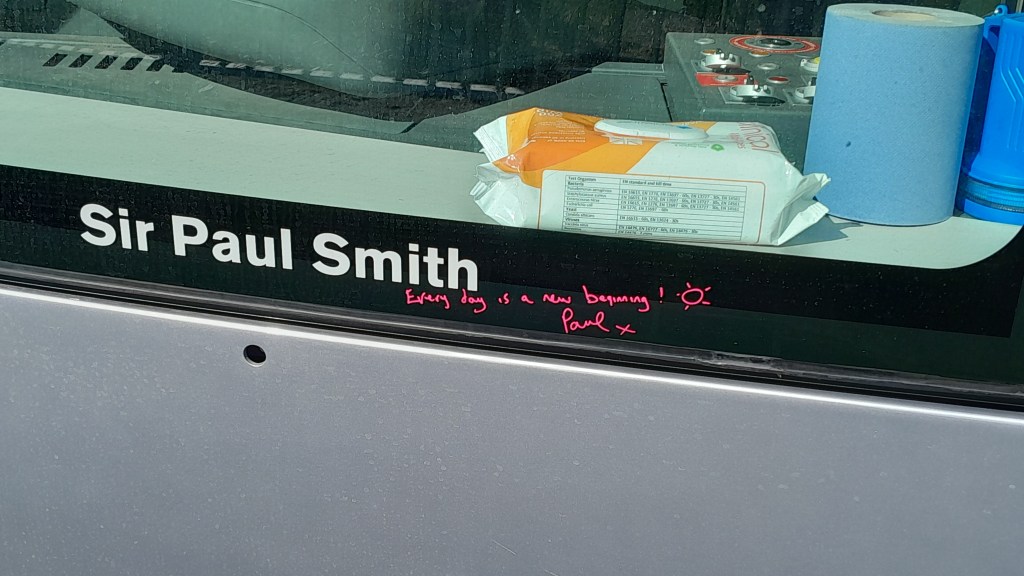
Don’t count on spotting Sir Paul behind the counter of the beautiful Willoughby House store on Low Pavement, though he has been known to drop by – and presumably it was he who autographed the (NET) Nottingham tram recently named after him – since he could, for instance, be in any one of 60 countries, visiting any of his 130 stores.
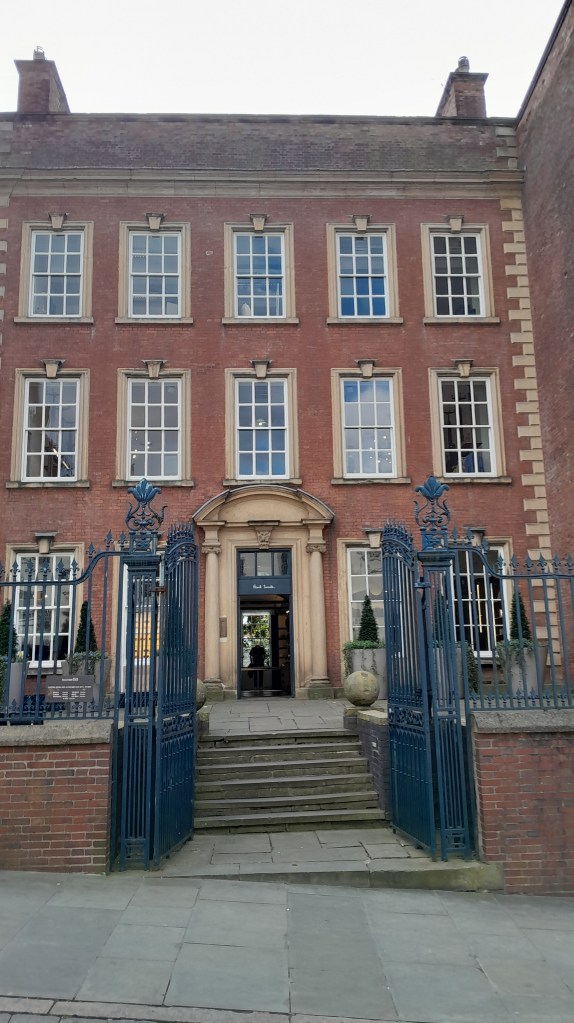
Although it’s the bold colours and designs that catch the eye, it’s arguably in the details where Paul Smith has really had most influence. It’s the colourful, pop of stitching or buttons that turn an ordinary wardrobe staple, like a men’s white shirt, into something far more than the sum of its parts; being serious enough to where to a board meeting, while humorous or witty enough to wear among a gathering of friends.
Rebel within the detail
How many navy blue suits has Paul Smith sold because the lining is so attractive? Perhaps this is the twist on the emperor’s new clothes, since although his design touches aren’t invisible, the point is inescapable that often the magic Paul Smith detail is only actually known to the person wearing his designs. Perhaps that’s the whole point. Perhaps that’s the rebel within Smith suggesting that we should only wear what we want to wear, rather than what everyone else expects us to wear.
Once said: “You can find inspiration in everything. If you can’t, then you’re not looking properly.”
Brief summary: Sir Paul Smith has all but rebooted how we think about colour and will paint stripes on just about anything.
 Nottingham Rebels