Actors are rebels. They pretend to be other people for a living. This, of course, can lead to problems when they forget who they are and where they came from. The sadness of Richard Beckinsale is that he didn’t live long enough to forget.
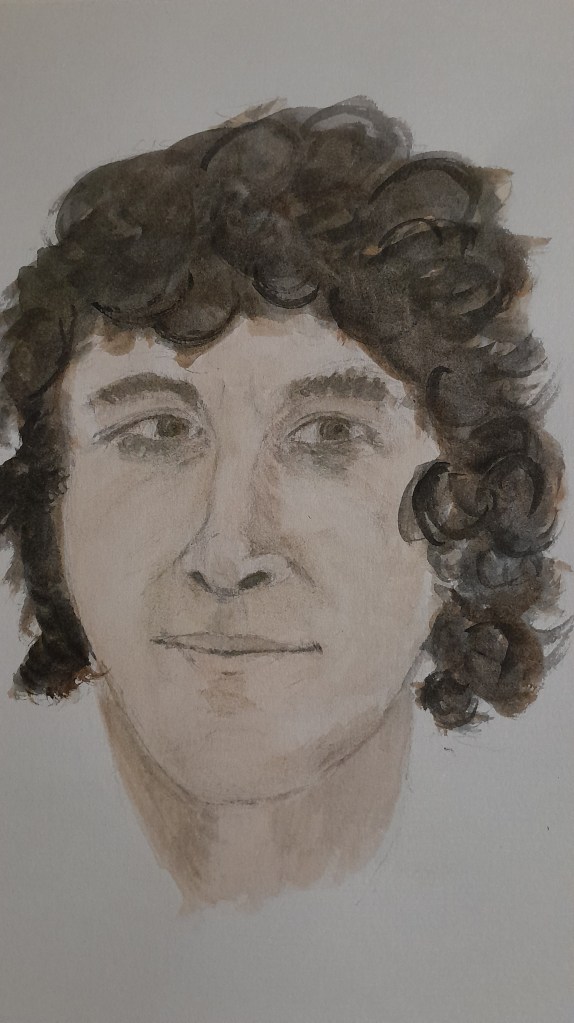
Richard Beckinsale is best known for his role in television sitcom, Porridge (written by Dick Clement and Ian La Frenais) which follows the exploits and small victories of cellmates, Norman Fletcher (Ronnie Barker) and Lennie Godber. Beckinsale plays the naïve youngster, who is ironically mentored by Fletcher in the ways of surviving (and thriving) in a life behind bars. Beckinsale plays the fresh-faced Godber with wide eyes and innocence; the ideal foil for the cynical, ‘seen it all before’ Fletcher, to fabulous comic effect.
Alongside Porridge, Beckinsale also played Alan Moore in Rising Damp (written by Eric Chappell) opposite Leonard Rossiter’s shabby landlord character, Rigsby, Don Warrington’s Philip Smith and Frances de la Tour’s Ruth Jones, which ran from 1974 – 1978. Beckinsale plays a medical student, again with a naïve character whose innocent observations are brilliantly delivered. Interestingly, he was the only one of the cast not to have been part of the original stage version before it went into production with Yorkshire Television.
Beckinsale was born in Carlton, Nottinghamshire, and from the age of 15 years old, when he left school, had ambitions to become an actor. Being too young to join a drama school, he took a series of manual jobs for the next year, before he joined Clarendon College (now part of Nottingham College) to take on a drama teaching course for the next two years.
As if few people from Nottingham consider drama as a viable career, Beckinsale was rebel enough to apply to the Royal Academy of Dramatic Art (RADA) but was unsuccessful. Nevertheless, he applied again and became one of around 30 students chosen from a pool of 12,500.
Beckinsale had a genuine passion for acting but also writing. A book of poetry With Love was posthumously published in 1980 and promoted by his wife, actress Judy Loe, Ronnie Barker and Richard Briers on the Russell Harty Show.
It’s difficult not to view Richard Beckinsale without becoming slightly melancholy. When any talent dies at just 31 years old, it’s a sadness, but when they’re arguably at the height of their powers it’s difficult not to consider what they may have gone on to do.
Just three days after he passed away, sitcom and Porridge sequel Going Straight, won a BAFTA award, with his co-star, Ronnie Barker, delivering a brief acceptance speech and tribute to Beckinsale. In fact, Beckinsale starred in three sitcoms that won BAFTA Awards three years running: Porridge in 1977, Rising Damp in 1978, and Going Straight in 1979. Also in 1979, the film version of Porridge (dir Dick Clement) was also released. (The Porridge television series ran from 1974 – 1977.)
A further, more oblique tribute was made more recently in the 2006 film Venus, (dir Roger Michell) when Peter O’Toole’s character, points to a plaque in the actor’s church, St Paul’s in Covent Garden, London, dedicated to Beckinsale as an example of an actor who died too young.
Once said: “When I decided to become an actor, it wasn’t actually to make money or to make a living. I wanted to be an actor because I wanted to act. I’ve always had this desire to communicate a great kind of beauty to other people, like a vicar or priest does, to transport people to the world where I live. I just appreciate living on Earth at an artistic level. There’s a great deal of satisfaction in living this way. It’s like love, I suppose. There are no words for it, apart from love – to give people love, to teach people love. I think it is probably the main driving force in my life.”
Brief summary: Beckinsale made acting look easy and loose. Perhaps because his comic delivery and timing looked so natural means that he isn’t always recognised as the outstanding talent he was, especially next to larger-than-life characters played by Ronnie Barker and Leonard Rossiter.






 Nottingham Rebels