Tag: news

  • Mary Earps – Safe Hands

    There is a saying that ‘goalkeepers are crazy’, however, Earps is the exception. She’s a superb footballer, a savvy operator, and a rebel.
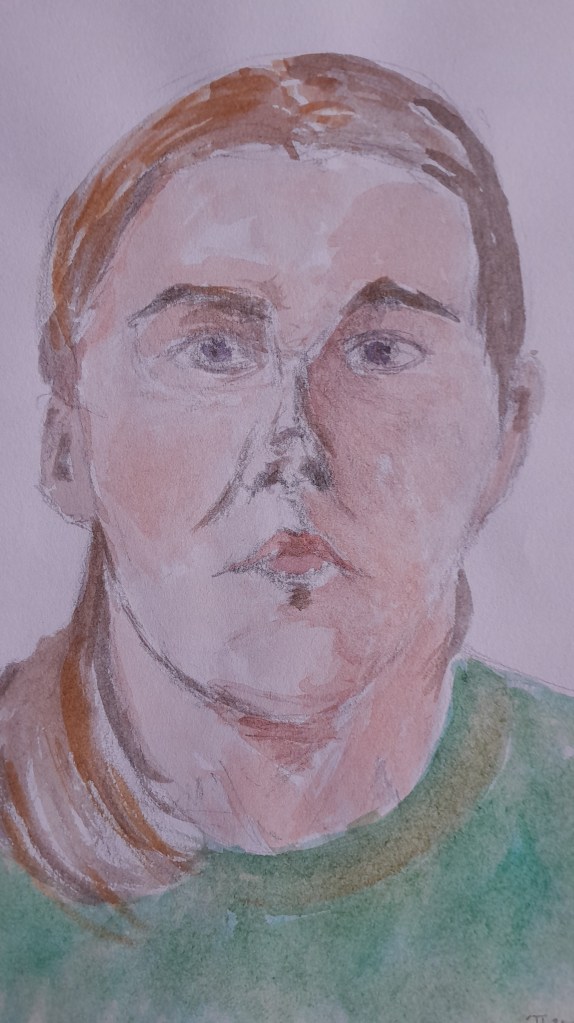
    All goalkeepers are rebels. They’re the footballers who, arguably, can’t play football; though that doesn’t diminish their skills, or supremely vital role in a football team. They’re the coxswain who operates the whole team from the very back, steering and encouraging.

    Mary Earps is a winner. She’s collected a winner’s medal in the UEFA Women’s Euro 22 competition and was named in the ‘Team of the Tournament’, she was awarded the Golden Glove for the 2023 FIFA Women’s World Cup tournament in 2023, after England’s defeat by Spain in the final, while earlier that year, she saved a penalty in a shootout against Brazil, helping England to triumph in the inaugural Women’s Finalissima, an intercontinental cup competition, organised by CONMEBOL and UEFA and contested between the winners of the Copa América Femenina and UEFA Women’s Championship.

    Advocate
    Away from the pitch, she’s also become seen as a persuasive advocate and role model for women’s sport. For instance, during the build-up to the World Cup, Earps publicly complained that there was no replica shirt with her name on it, taking on Nike, the most influential sports brand in the world, in the process.

    Earps heard about the kit problem in April 2023, months before the World Cup but after much “fighting behind closed doors”, including a proposal to pay for the production of the kits herself, Nike relented and committed to making replica shirts for girls and women. Even so, and despite support from the Football Association (FA), Nike was only moved to do so after the World Cup and Earps’ enormous success. Earps produced her own limited edition T-shirts for fans to wear weeks earlier, during the tournament.

    Later in 2023, Earps was announced as the winner of the BBC Sports Personality of the Year Award and presented with an MBE in the 2024 New Year Honours for services to football.

    Born in Nottingham, Earps signed briefly for Leicester City before moving to Nottingham Forest and making just four appearances for the club in the 2010 – 2011 season. Nevertheless, she progressed at several other clubs and between 2019 and 2024 appeared over 100 times for Manchester United, before moving to her current club, Paris Saint-Germain. Earps has also represented England at U17, U19 and U23 level, making her senior debut in 2017. She played every minute of England’s successful 2022 Euros campaign and likewise in all seven games during the 2023 World Cup and was named England Women’s Player of the Year for the 2022–23 season.

    Change
    Football has changed, and Nottingham has changed. Football was once a male, working class preserve but has now expanded to become far more diverse. It’s a good thing that rainbow scarves are now on sale at The City Ground but if there is a downside of this success, it is perhaps that the game, once rooted in working class culture, may well have left other parts of the community behind. It’s well known that The City Ground is a ‘cashless’ environment – and let’s be realistic, those are generally places for people who don’t need to know how far into their overdraft they are. But that’s really for another blog, concerning class and the cost of living.

    Anyway, one day, very soon, women’s footballers won’t be regarded as rebels. That’s what’s known as an ‘endgame’ – a very rare and rebellious thing indeed. Earps has played an important part in that rebellious journey.

    Once said: “Keep going, you can achieve anything you set your mind to. Sometimes success looks like this, collecting trophies, sometimes it’s just waking up and putting one step in front of the other. There’s only one of you in the world, and that’s more than enough. Be unapologetically yourself.”

    Brief summary: Earps is right up there with the best of Nottingham’s sporting greats. What’s more, she’s become an important and iconic figure by daring to challenge the status quo.

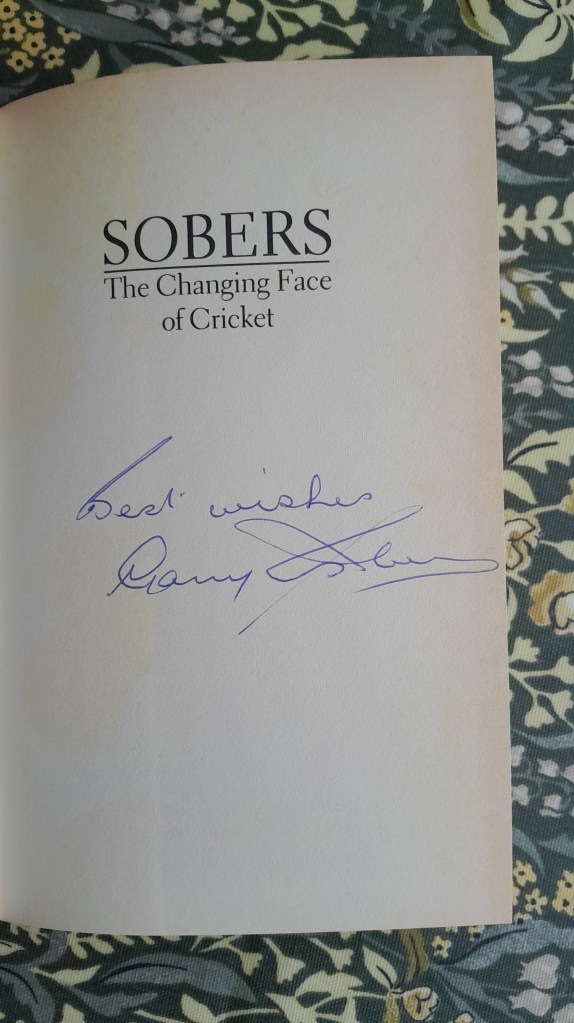
  • Sir Gary Sobers – Six of the Best!

    Cricket is a game of etiquette and gentility. While Gary Sobers played with grace and elegance, he also had guts, determination, nerve and an aggression, that if not new to the game, was certainly unusual. Nottinghamshire County Cricket Club would be a different club without Sobers, and indeed, cricket itself, wouldn’t be what it is today either.

    Gary Sobers had a friendly arrogance and was arguably, the most gifted of any test cricketer before or since.

    Despite being courted by seven counties, Sobers signed for Notts in 1968. Not only was he the first Black player to play for the county side but he was also the first Black player to captain Notts.

    Sport is always described in moments, and the moment that defines Sobers, certainly as a Notts player, came against Glamorgan, in his first season with the club, when he became the first player in first-class cricket to hit six consecutive sixes in one (six ball) over.

    Watching the grainy monochrome footage back, it’s a great bit of batting with the first two sixes hit cleanly out of the ground over long on. Even as Roger Davis catches the ball off the fifth ball before tumbling over the boundary for another six, Sobers remains entirely calm and doesn’t flinch from hitting the next ball over square leg and “Way down to Swansea” as the commentator puts it. To Sobers, even though the last ball of Malcolm Nash’s fabled over was full and straight, he clearly regarded it a formality. Indeed, few other cricketers could have swivelled so tightly to make the shot possible.

    Cavalier
    That one over changed cricket. Sobers had shown a new cavalier style, so it’s somewhat strange to hear that what has become known as ‘Bazball’ was invented and named after New Zealand cricketer (and England coach) Brendon McCullum, in 2022.

    At the time of his Notts career, Sobers was the holder of the highest ever score in a test match, 365, made against Pakistan in 1958 (aged 21). Surprisingly, it was his maiden test century, showing again his irrepressible willpower and rebellious streak to push on.


    At the time, snobbery among the game’s officialdom (The MCC) meant that the score wasn’t universally accepted as the highest in tests, since only Ashes matches between England and Australia were then regarded as worthwhile competition. Len Hutton’s 364 in the 1938 Ashes match at The Oval was regarded as the finer achievement, even though Sobers had beaten it in an innings of 10 hours (three hours less than Hutton had taken).

    Sobers was certainly the most versatile test player; he batted left-handed and bowled left arm fast-medium, left arm orthodox spin and left arm unorthodox spin (known today as leg spin) and he was a fine close fielder. Sobers defines the potency of the all-rounder.

    Influence
    Sobers’ mark on Notts CCC cannot be ignored. By not only signing a Black player (and making him captain) Notts were making both a statement and club history. The class segregation era (Gentlemen v Players) at Notts was genuinely buried in favour of true meritocracy and Sobers repaid the club, not only in living up to his promise as a player (and responsibility as a role model), but also with six years of loyalty at a time when he could have gone to play anywhere. Since 1968, other non-English players have also had prolific success at the club, not least fellow Barbadian, Franklyn Stephenson, who Sobers reckoned was “really hard done by” by the West Indies selectors after touring apartheid era South Africa.

    Once said: “I enjoyed playing any type of cricket. Didn’t matter what type it was because I did not want to change my game. My game was built on one type of cricket: if there was a ball to hit, you hit it, whether it was Test matches, [or] whatever it was.”

    Brief summary: Gary Sobers is surely the most versatile test cricketer in history. His influence over the pace of cricket today ironically means that there’s unlikely ever to be another quite like him.