Clockmaking is a serious, scientific business. Rowland Emett’s kinetic sculpture, known as the Emett Clock, is anything but. Its whimsical design has been casting enchantment over the people of Nottingham since 1973.
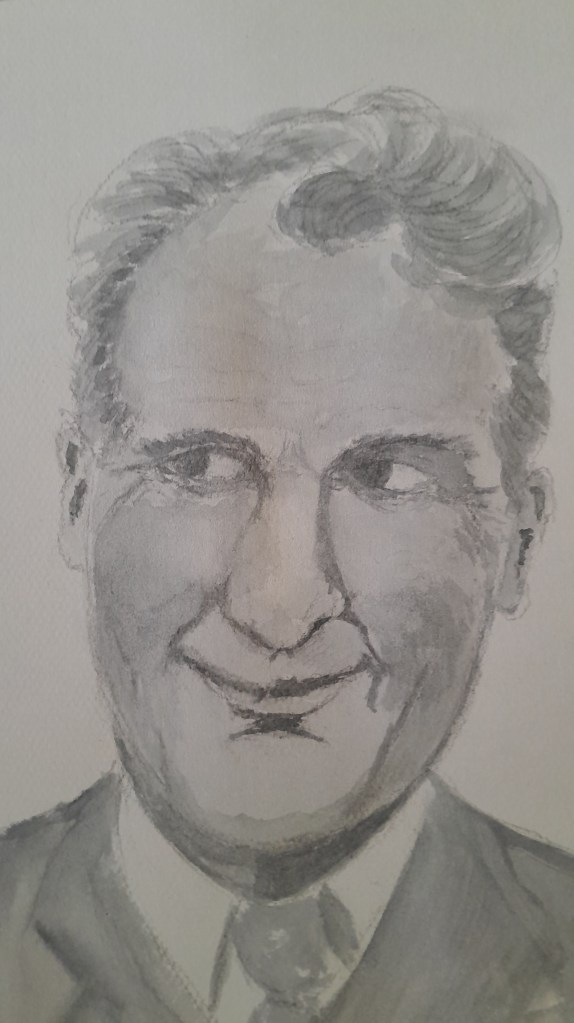
Imagination is a type of rebellion. It takes something approaching rebel spirit to envisage things differently and create things that nobody else has ever thought of before. Emett married the art of cartoons with engineering and sculpture.
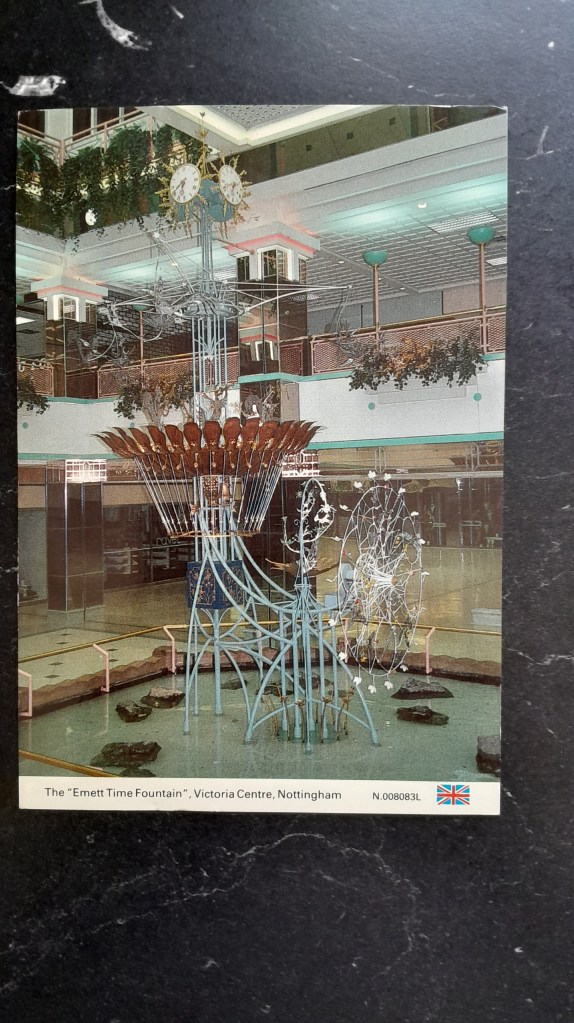
Every parent in Nottingham has been pulled on the sleeve by their children to look at what is known as the ‘Emett Clock’. It’s a charming, whimsical and imaginative piece of kinetic sculpture that captivates a promenade audience to its performances every 15-minutes.
While only some adults, such as Emett, can be described as rebels, all children are rebels. Perhaps that’s why they are so drawn by Emett’s masterpiece, The Aqua Horological Tintinnabulator, (to use its official title) which sits in Nottingham’s Victoria Centre shopping mall. In any case, it provides a few moments of nostalgia for grown-ups who knew the clock in their childhood, and a sense of awe for their children.
Fantastical
The ‘water-powered’ clock stands 23 feet tall and features a two-metre diameter cobweb wheel carrying glittering butterflies and frogs, kept in perpetual motion by the flow of water. Meanwhile, three limbs, decorated with fantastical animal scenes also spin relentlessly.
As if that weren’t enough, every 15 minutes, the clock becomes further animated for just over a minute and reveals a troop of animal shapes from behind metal flower petals, while playing Gigue en Rondeau II (for harpsichord) by Jean Philippe Rameau. (Before 2015 the clock ‘performed’ every 30 minutes.)
Impulse shopping
The Aqua Horological Tintinnabulator, was commissioned by property investment company, Capital and Counties in 1970 and took two years to build before being installed inside the main entrance of the Victoria Centre in 1973, presumably to increase ‘impulse buying’ by pulling in shoppers to marvel at it for a few minutes before being drawn by goods in surrounding shop windows. It does seem odd that in 2015 it was reinstalled at the very back of the first floor, on the way to the Victoria Bus Station, where its charm goes somewhat to waste, rather than powering much-needed commercial success.
Frederick Rowland Emett (known as Rowland – often his name is misspelled as Roland Emmett) was born in New Southgate, London, the son of a businessman and amateur inventor, and the grandson of Queen Victoria’s engraver. He was educated and lived mostly in Birmingham – a city known for silversmithing and jewellery – a likely source of inspiration and indeed, in 1941 he married the daughter of a Birmingham silversmith, who later managed his business interests. Apart from the clock, Emett appears to have no further links with Nottingham.
Emett was also a talented artist who had a painting exhibited at the Royal Academy and was well known as a cartoonist for Punch Magazine from around 1939 until the 1960s, though his subjects tended to be absurd, rather than political. His artistic and mechanical gifts may well have been refined by time spent as a draughtsman for the Air Ministry during the Second World War.
You may also have seen several of his ‘inventions’ in the workshop of Caratacus Potts, in the 1968 film, Chitty Chitty Bang Bang. The eponymous car was co-designed by Emett and Ken Adam (who also worked on the James Bond movies).
Once said: “They are the direct opposite, I suppose, of the average idea of the implacable, soulless machine, driving relentlessly on, or these frightening electronic proliferations, ready at the drop of a silicone chip to take us all over… My Machines are friendly, they are happy, they crave love, and I really think they get it.”
Brief summary: Emett designed one of Nottingham’s most wonderful treasures. To have created something so sparkling during the gloom of the early 1970s says much for his imagination and creative genius.
 Nottingham Rebels
Leave a comment